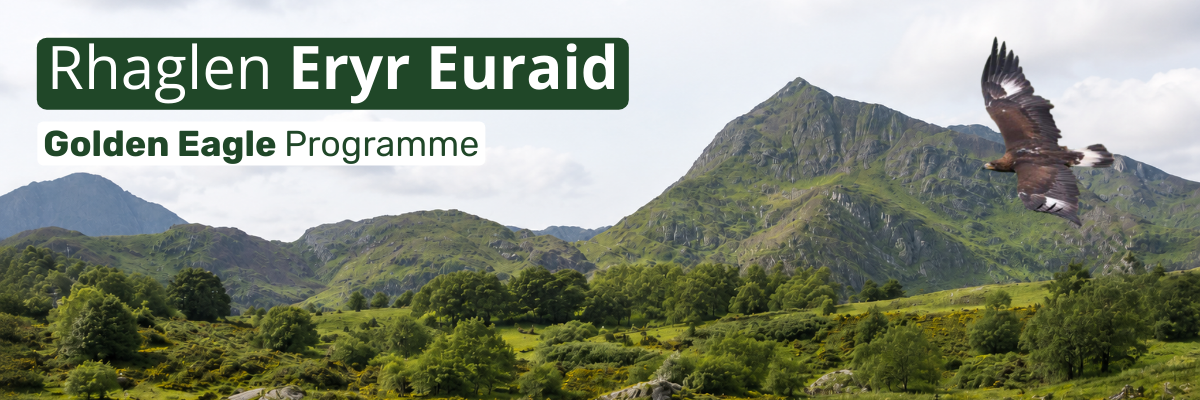
A lost native of Welsh Uplands

Golden Eagles (Eryr Euraid) were once a natural and widespread part of the Welsh landscape. From rugged mountains to remote uplands, these iconic birds soared across Wales for thousands of years. Evidence from across Wales shows that Golden Eagles were present from prehistoric times through to the 19th century, forming part of both the ecological fabric and cultural identity of Wales.

However, like many birds of prey across Britain, Golden Eagles were driven to extinction in Wales during the mid-1800s, with the last breeding records coming from the mountains of Snowdonia (Eryri). Their loss marked the disappearance of one of Wales’ most iconic upland bird of prey — a species that had shaped these landscapes for millennia.
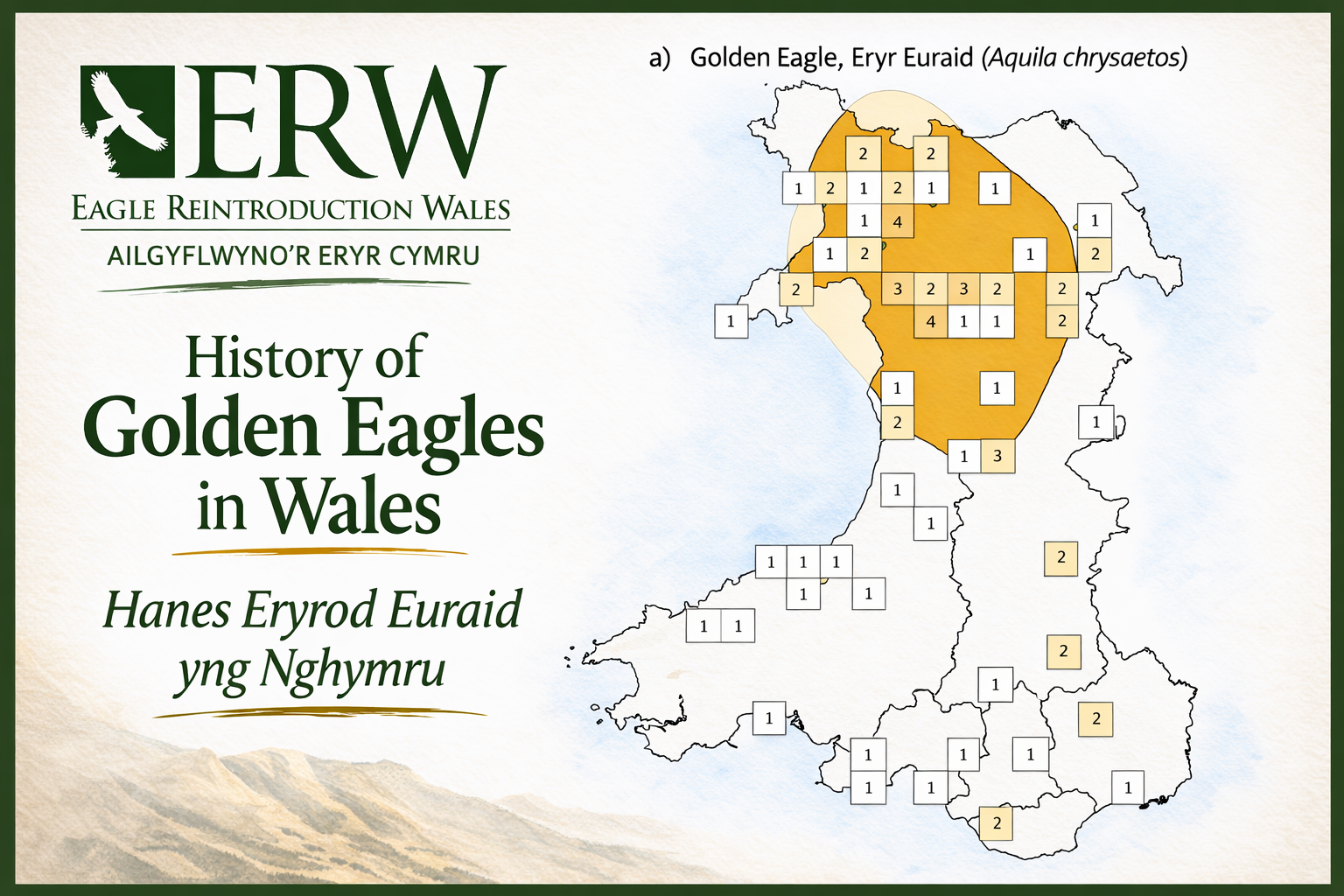


How do we know Golden Eagles lived in Wales?

Our understanding of Golden Eagles in Wales is built on multiple lines of evidence, combining science, history, and culture. Together, these records span over 5,000 years, providing compelling evidence that Golden Eagles were not occasional visitors — but a native breeding species embedded within Welsh ecosystems.

 

Archaeology & fossils

Golden Eagle remains from archaeological and palaeontological records show the species has been present in Wales since prehistory, including records dating back to the Neolithic period.

Historic records

Written accounts, persecution records and museum material all contribute to the picture of Golden Eagles as former Welsh breeding birds. Historic records include references to nests in Denbighshire, Gwynedd and Eryri (Snowdonia).

Welsh place-names

Welsh place-names containing eagle elements such as eryr and eryrod reflects a long-standing association between people and eagles in across the Welsh landscape.
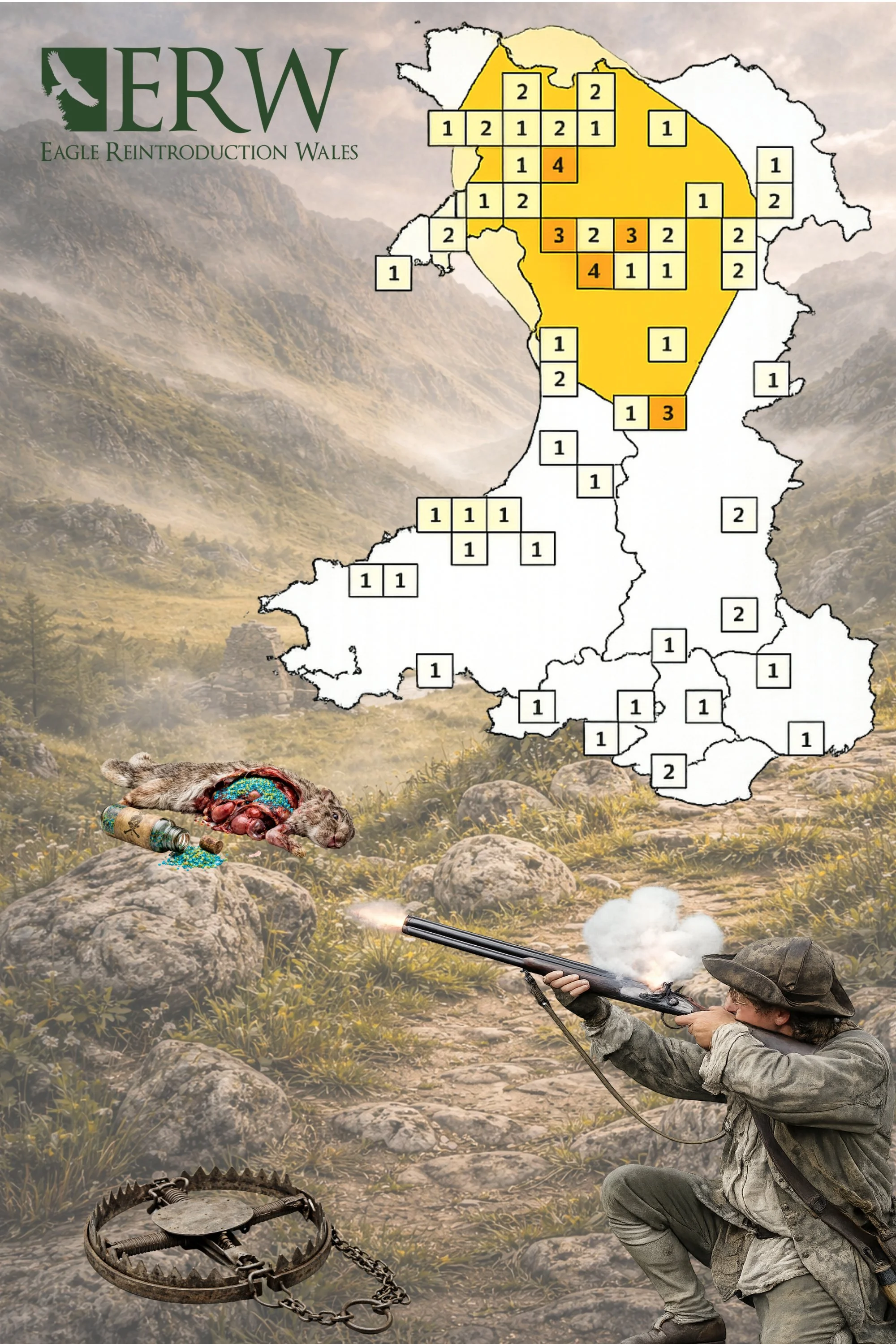

 

Golden Eagles through Welsh history

Golden Eagle records occur across much of Wales, but are strongly concentrated in the north-west (74%). Their historic core range centred on Gwynedd, particularly the Eryri (Snowdonia) mountains, extending into Clwyd and north-west Powys.

Notable nesting sites include Carnedd Llewelyn and Castell Dinas Brân, reflecting a clear association with upland, inland and mountainous landscapes.


Why were Golden Eagles lost from Wales?

Golden Eagles did not disappear naturally — their loss was driven by sustained human persecution. Across Wales and Britain, birds of prey were widely shot, trapped and poisoned, often viewed as threats to farming interests.

Historic records document over 1,500 newspaper reports of eagle killings in Wales, including at least 84 confirmed incidents between 1804 and 1920. By the mid-19th century, this pressure led to the loss of Golden Eagles as a breeding species in Wales. This pattern was not unique to Wales, but part of a wider decline across Britain and Europe, where many birds of prey were driven to local extinction.


A future informed by the past

Golden Eagles once soared over the uplands of Wales — and those landscapes still remain. Since their loss, attitudes have changed. Legal protection, conservation action and growing public support mean the species is now fully protected, with persecution greatly reduced.

Understanding the past helps shape the future. By combining historic evidence, habitat suitability and modern conservation frameworks, we can assess whether restoring this lost native species is both ecologically appropriate and socially acceptable. The evidence is clear: Wales lies within the Golden Eagle’s former natural range, where it was once widespread and ecologically embedded — providing a strong foundation for exploring the potential return of Golden Eagles to Wales.