Wales: A home for Golden Eagles
Golden Eagles (Eryr Euraid) once formed part of the natural landscape of Wales, occupying extensive upland environments across the country. Although they are now absent, much of this landscape still retains the ecological characteristics required to support breeding birds.
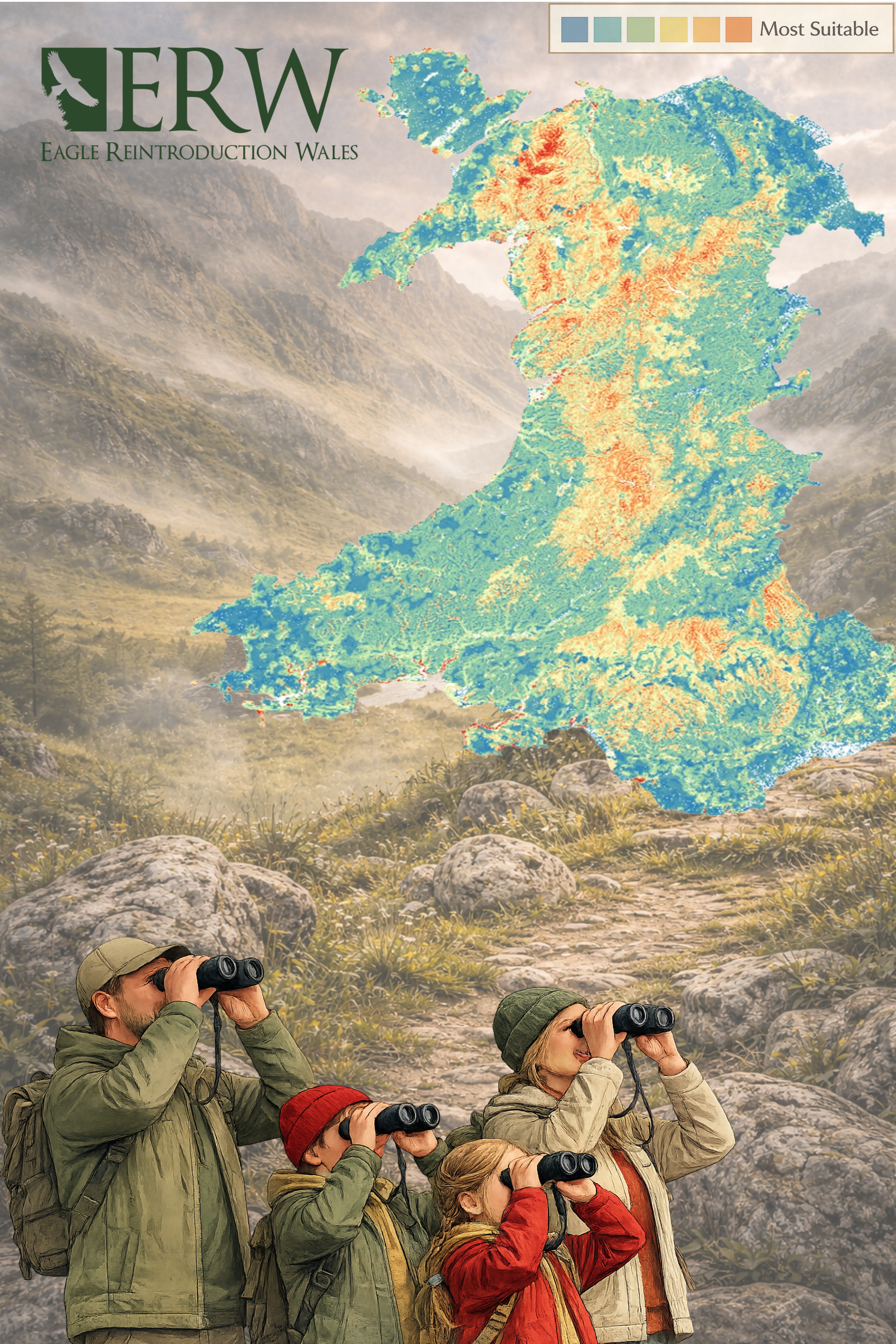
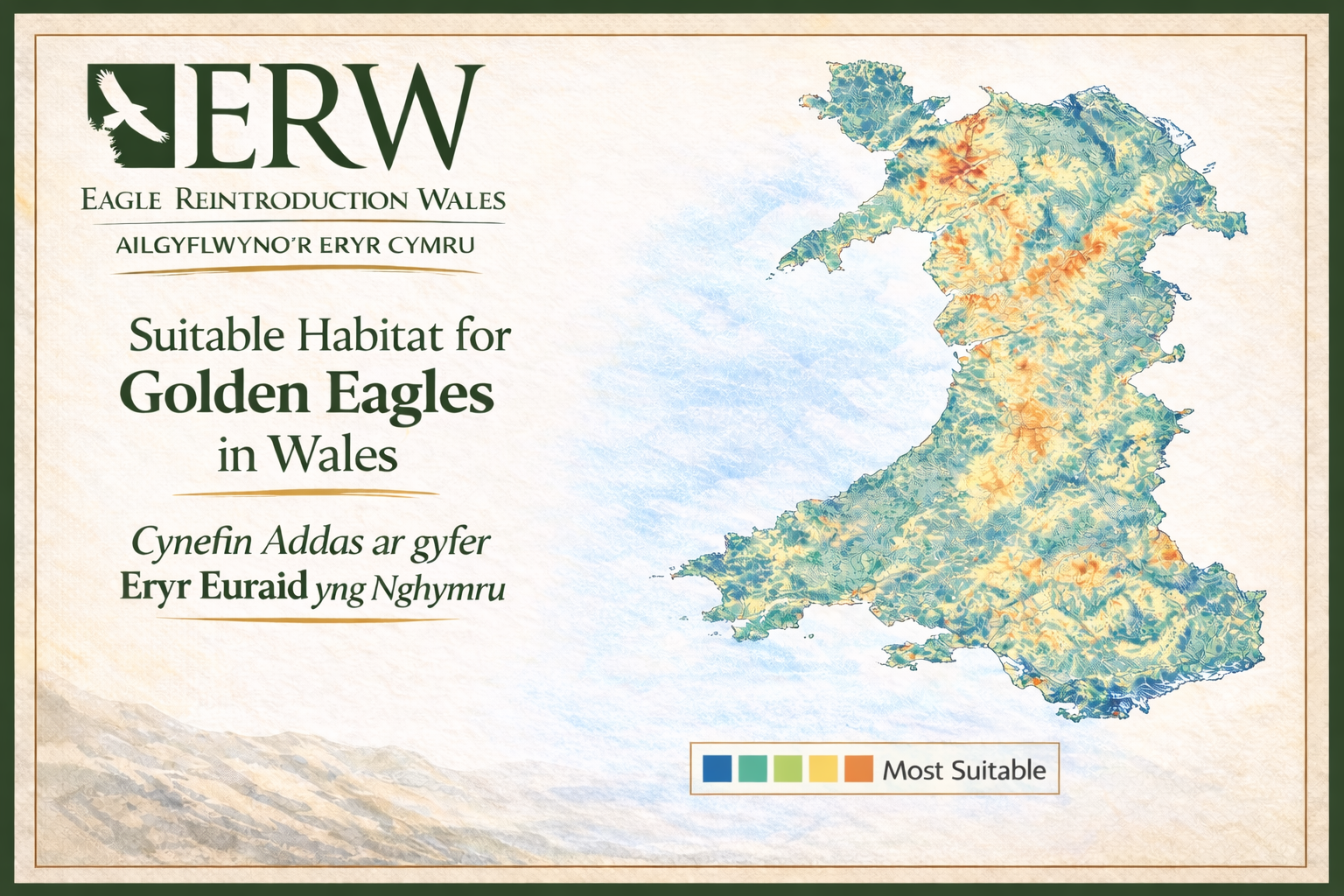
Using species distribution modelling, our research identifies where modern Welsh landscapes remain suitable for Golden Eagles. The results show that large areas of Wales continue to provide the environmental conditions needed for nesting, foraging, and movement. This evidence demonstrates that Wales is not only part of the species’ former range, but still contains substantial areas capable of supporting Golden Eagles today.
Golden Eagle Habitat Requirements
Golden Eagles are strongly associated with open upland environments, where topography and landscape structure determine suitability. Key requirements include elevation (>350 m), proximity to mountain ridgelines, and open terrain, which together provide the conditions needed for nesting, hunting, and movement. These features are typically found within moorland, heath, peatland, and rough grazing landscapes, which remain widely distributed across Wales.
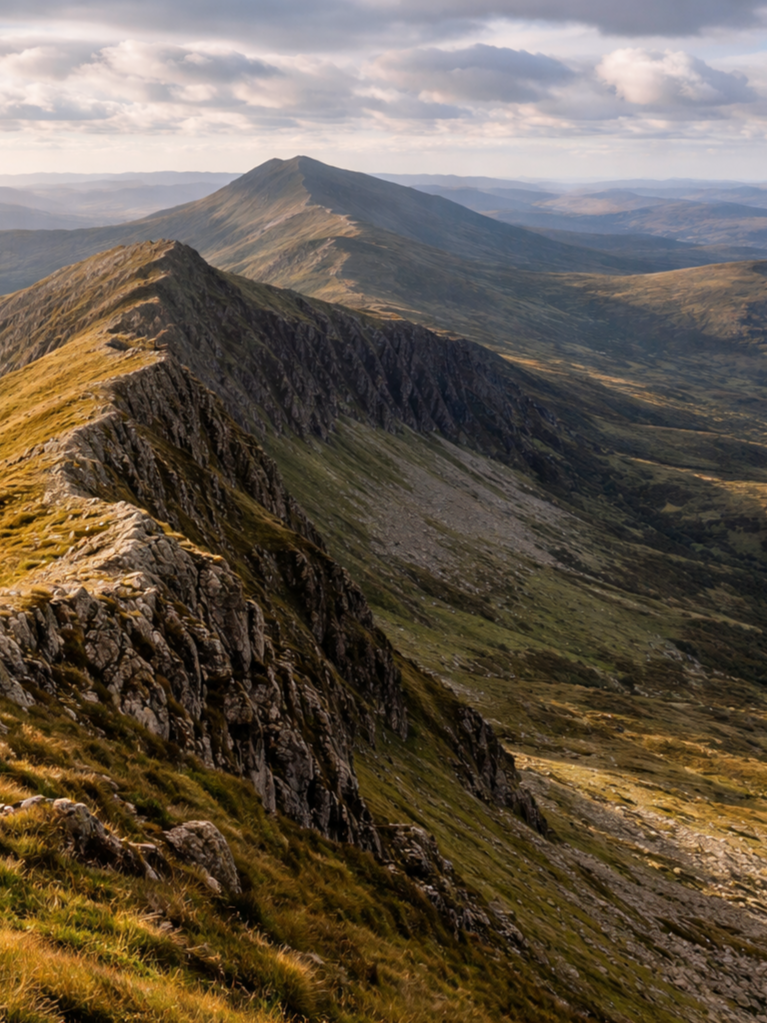
Upland Elevation & Topography
Golden Eagles favour upland landscapes where elevation (>350 m asl) and proximity to ridgelines (typically within ~200–300 m) provide nesting opportunities, access to uplift, and the conditions needed for efficient movement across territories.
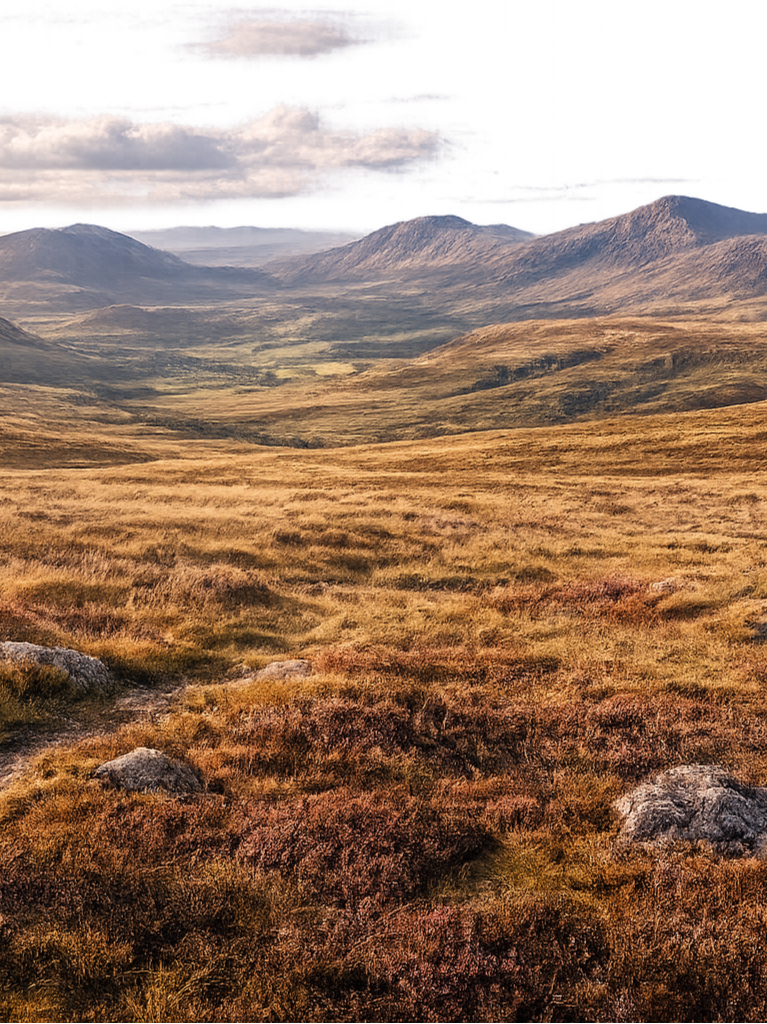
Open Landscapes & Visibility
Open landscapes allow eagles to detect prey, move freely, and hunt effectively, with minimal obstruction from vegetation or terrain. These areas are typically dominated by moorland, heath, peatland and rough grazing, which support prey availability and provide suitable foraging conditions.
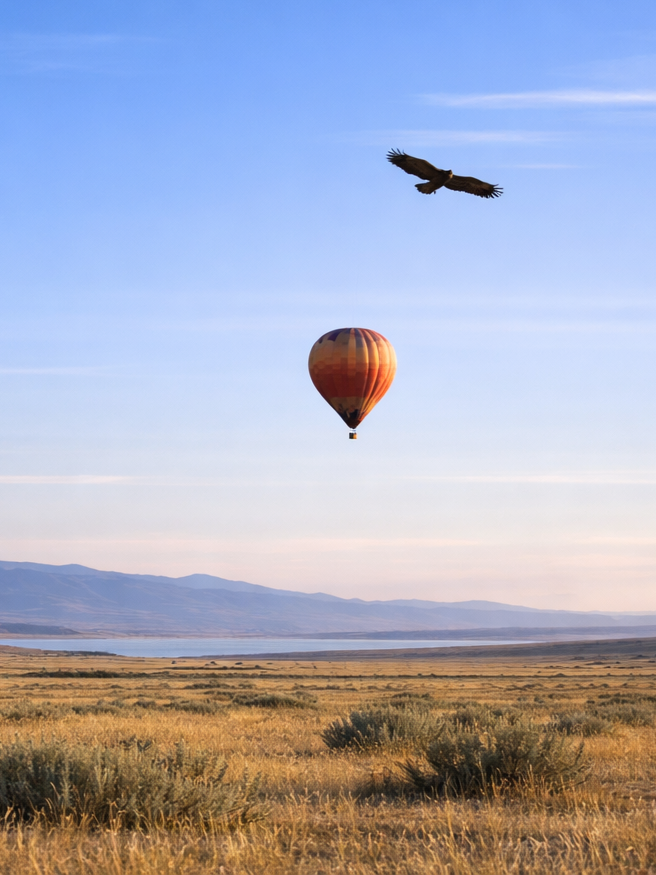
Space, Low Disturbance & Airspace
Golden Eagles require large, undisturbed areas to establish territories and breed successfully. Access to wind and uplift is also essential, enabling energy-efficient flight across wide landscapes and supporting movement between nesting and foraging areas.