Wales: A Home for White-tailed Eagles
White-tailed Eagles were once a natural part of the Welsh landscape, closely associated with coasts, estuaries and freshwater systems. Although now absent as a breeding species, these environments remain widely distributed across Wales.
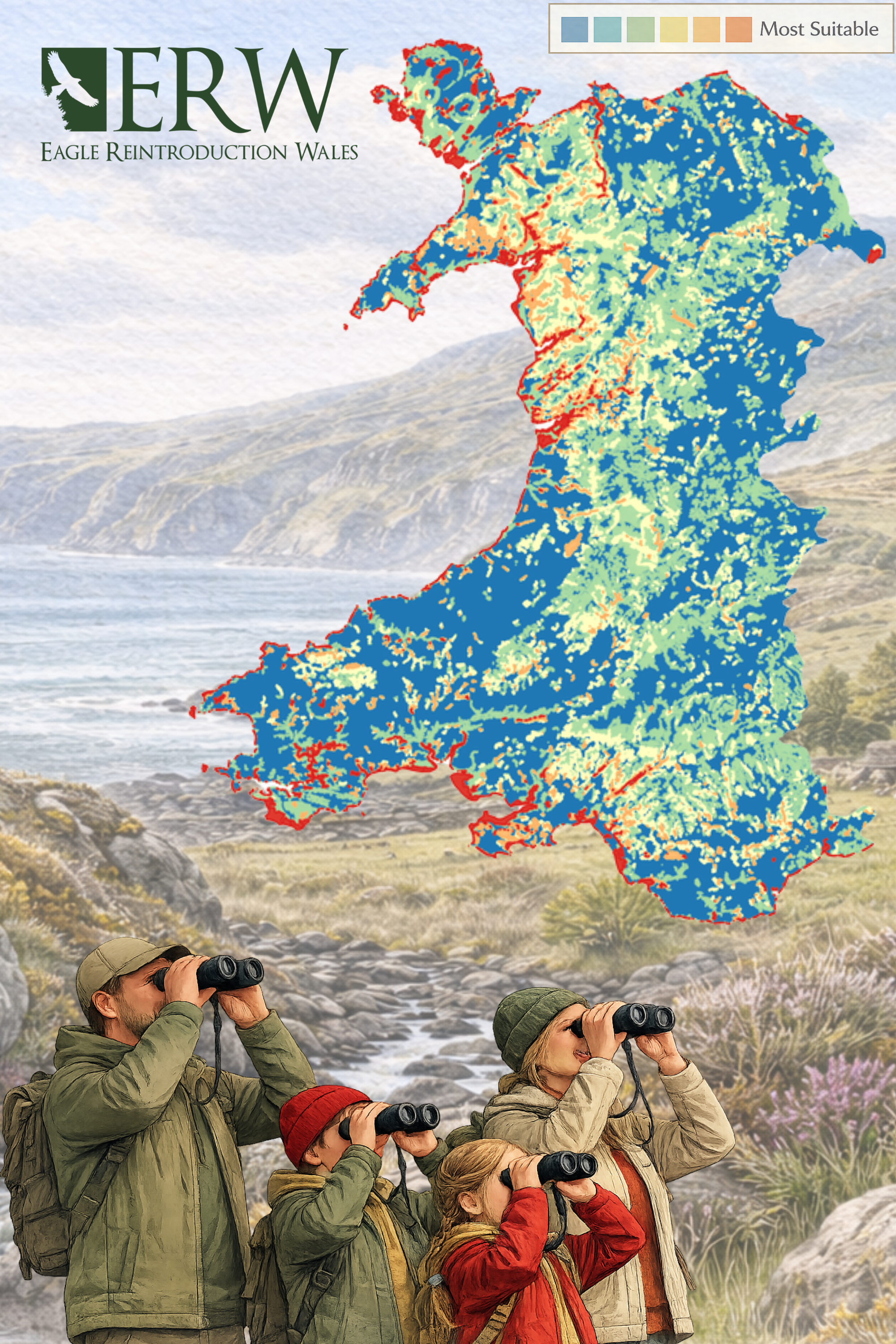
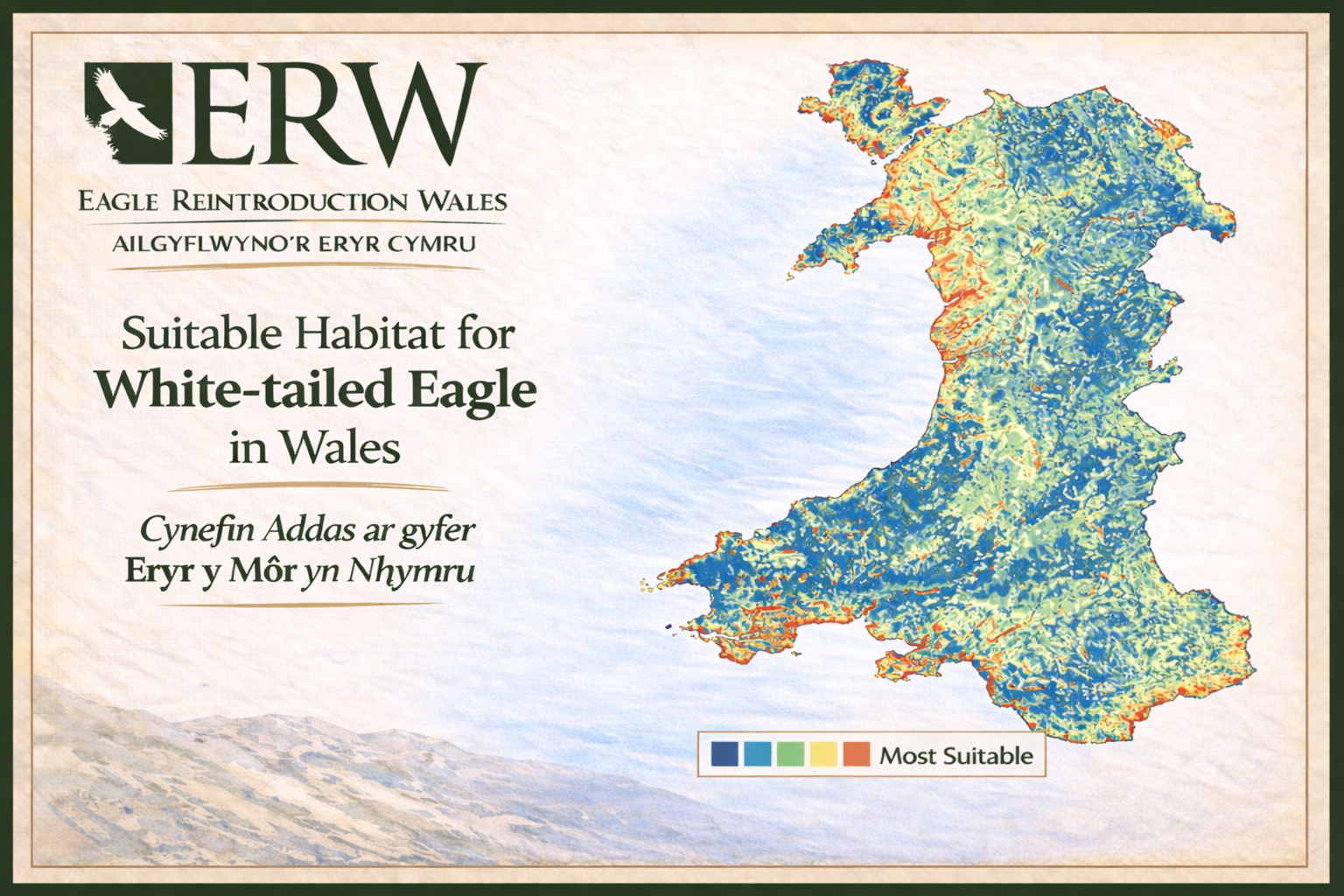
Using species distribution modelling, our research identifies where modern Welsh landscapes continue to provide suitable breeding habitat for White-tailed Eagles. The results highlight extensive areas of coastal and inland environments capable of supporting roosting, nesting, and foraging. This evidence demonstrates that Wales remains firmly within the species’ natural ecological range and continues to provide the conditions required for breeding White-tailed Eagles today.
White-tailed Eagle Habitat Requirements
White-tailed Eagles occupy a distinct ecological niche compared to Golden Eagles, favouring lowland landscapes associated with water. Key requirements include low elevation (<124 m asl), proximity to coast (<700 m), and proximity to inland water (<431 m from lakes and rivers). Breeding territories are typically centred around coastlines and estuaries, rivers, lakes and wetlands, with forested areas or cliffs providing suitable nesting sites. Together, these features provide reliable food sources and nesting structures, supporting breeding pairs across both coastal and inland environments.
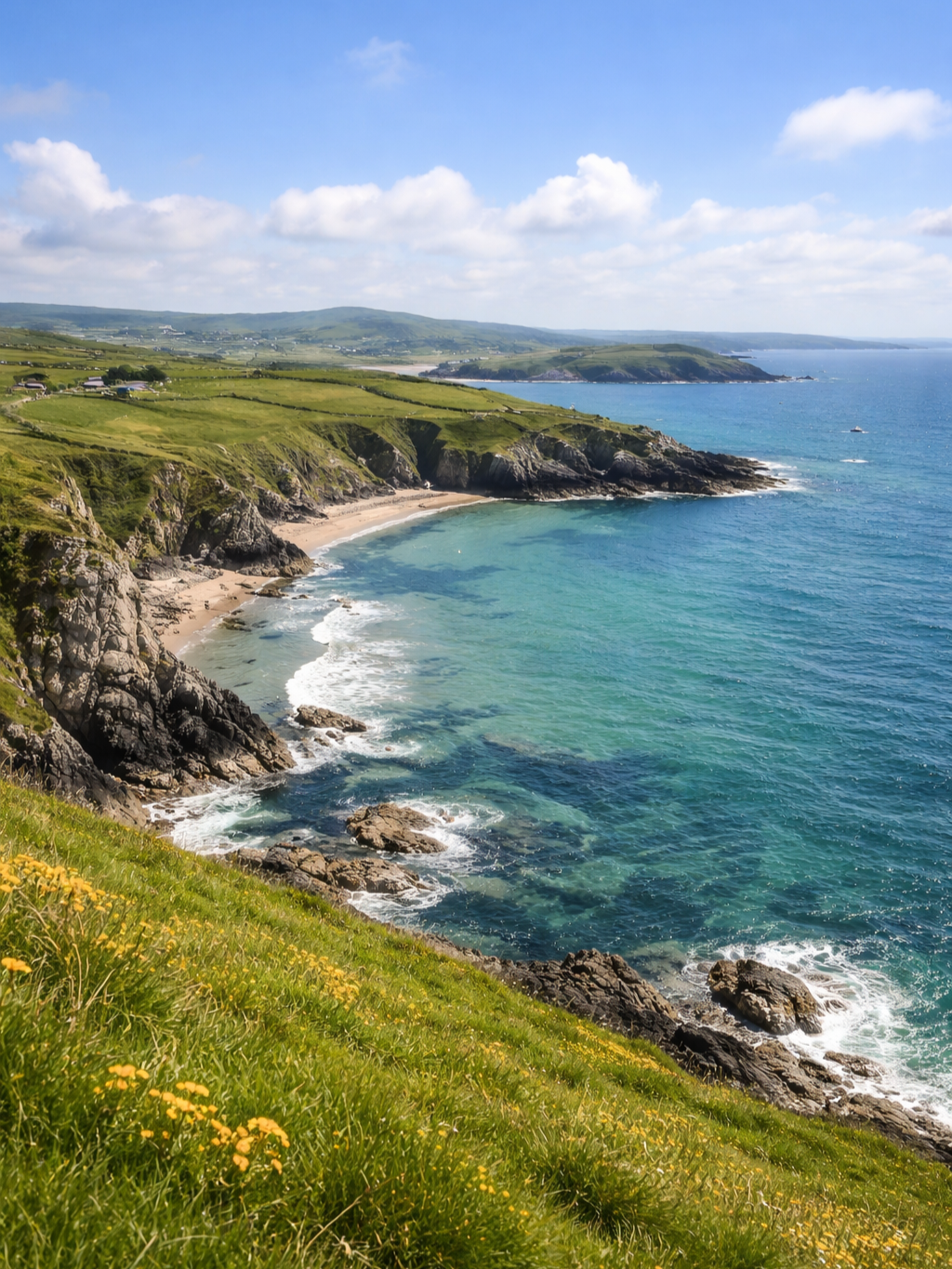
Lowland Elevation & Coastal Proximity
White-tailed Eagles favour lowland environments (<124 m asl), particularly along coastlines (within ~700 m), where marine habitats provide consistent food resources and suitable breeding territories.
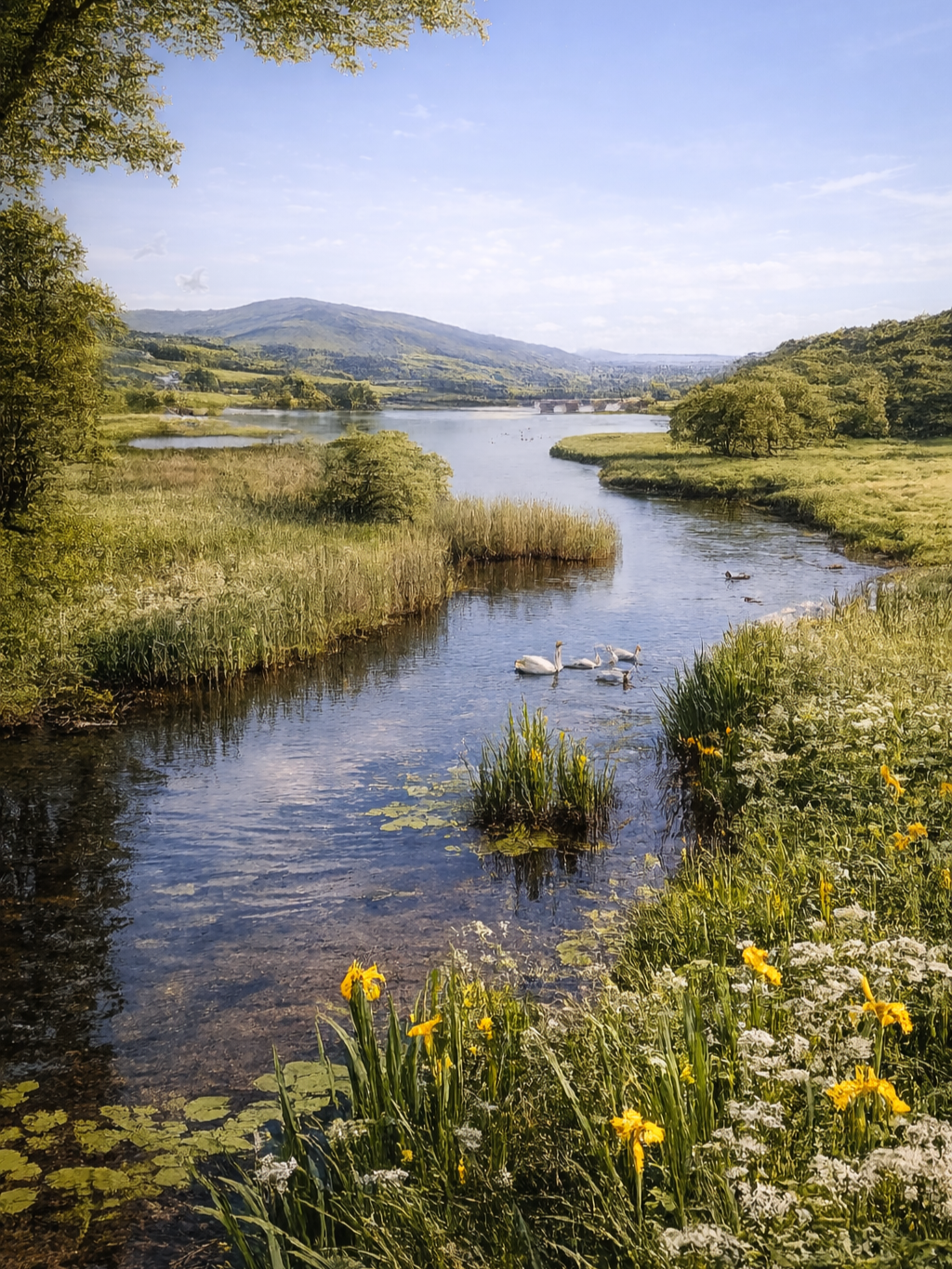
Freshwater & Wetland Systems
Access to freshwater and estuarine systems is essential, with eagles typically found within ~431 m of lakes and rivers, including estuaries, wetlands and watercourses, which provide feeding opportunities and support a wide range of aquatic prey.
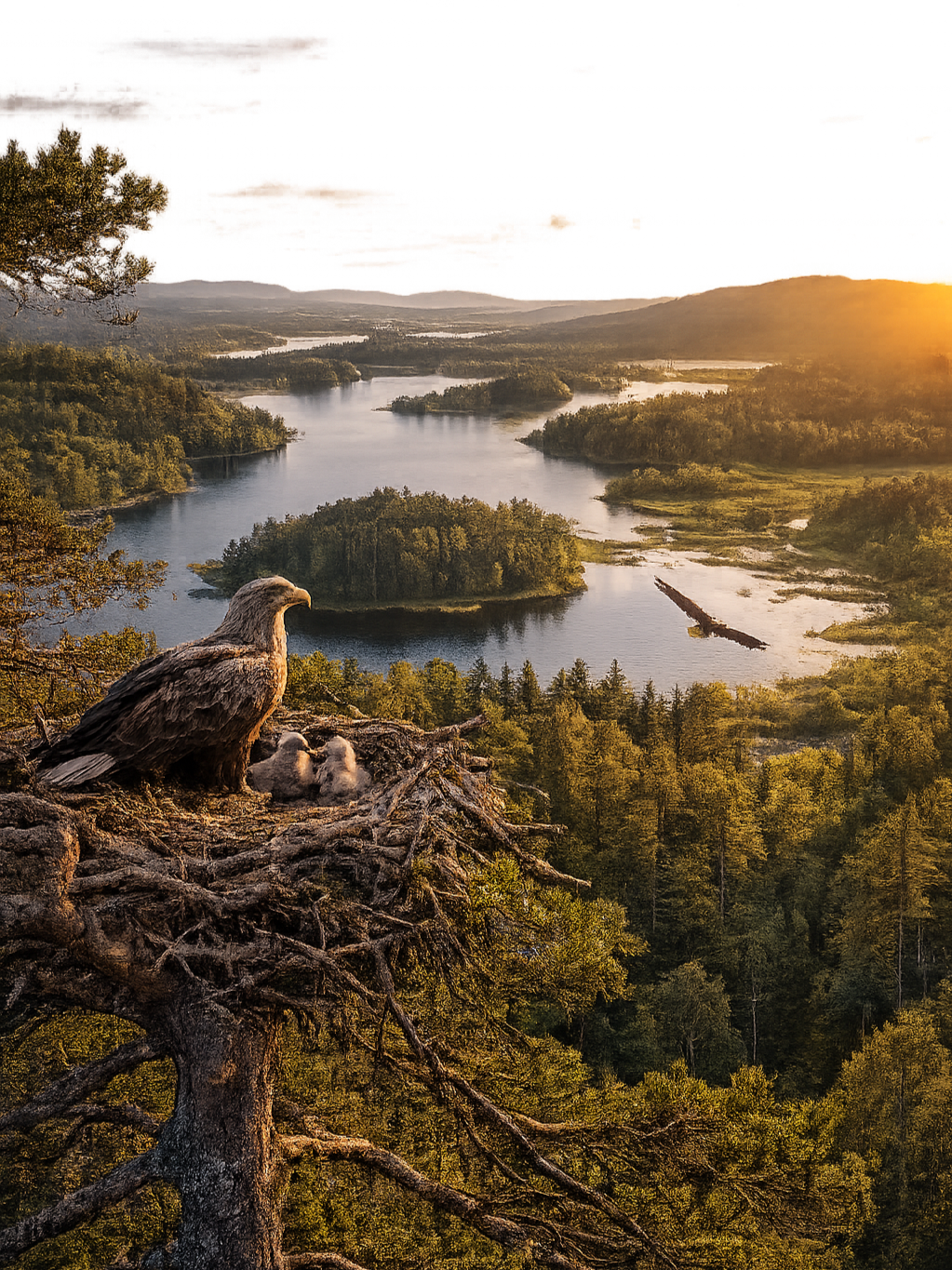
Nesting Structure, Space & Foraging Landscape
White-tailed Eagles require suitable nesting structures in forested areas or coastal cliffs, alongside open landscapes for foraging and large, connected territories that allow movement, hunting and successful breeding.