White-tailed Eagle Food Web & Ecology

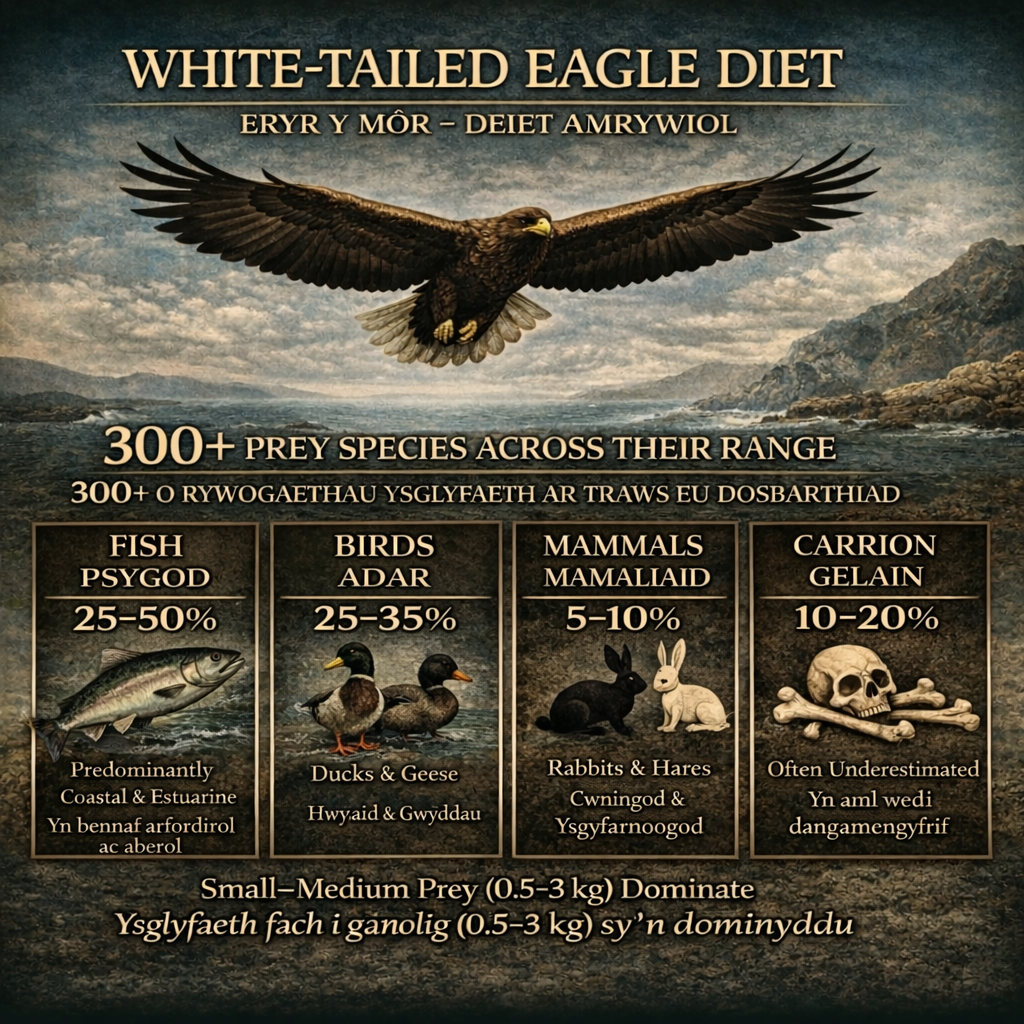
White-tailed Eagles have a highly varied diet, with over 300 prey species recorded across their range. Across Europe, their diet is typically dominated by fish (25–50%) and birds (25–35%), particularly waterbirds such as ducks and geese. Smaller contributions come from mammals (5–10%) and carrion (10–20%), although carrion use is often underestimated.

Most prey are small to medium-sized (typically 0.5–3kg), with larger prey taken only occasionally, often involving carrion or vulnerable individuals. Despite their size, White-tailed Eagles require relatively modest amounts of food (around 500 g per day), feeding opportunistically and often alternating between periods of fasting and larger meals. They are highly energy-efficient predators, relying on soaring flight and selective hunting to minimise energy use.

Prey selection is driven by availability, with eagles taking the most abundant and accessible food sources within coastal, estuarine and freshwater environments. As a result, predation pressure is spread across multiple species rather than concentrated on any one population, while carrion use contributes to nutrient recycling across both aquatic and terrestrial ecosystems. This flexibility allows White-tailed Eagles to respond to local and seasonal conditions, supporting balanced and resilient food webs.
 

How do White-tailed Eagles interact with wildlife?

White-tailed Eagles occupy an important role within coastal, estuarine and freshwater ecosystems as both top predators and scavengers. While they are sometimes perceived negatively, their ecological role is natural and contributes to healthy ecosystem function. They interact with wildlife through a combination of predation, scavenging and influences on mesopredators. Together, these processes help regulate food webs, recycle nutrients across aquatic and terrestrial environments, and support balanced, functioning ecosystems.
Predation

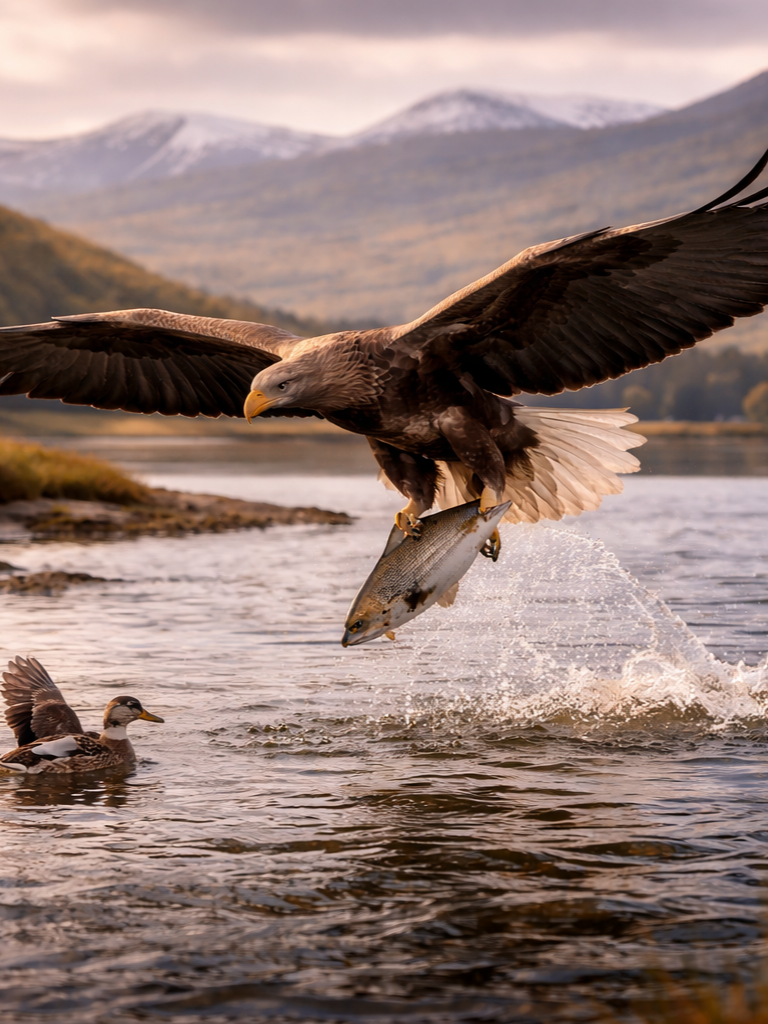
Regulation of common and abundant prey species, particularly fish and waterbirds, with smaller contributions from mammals.
Scavenging

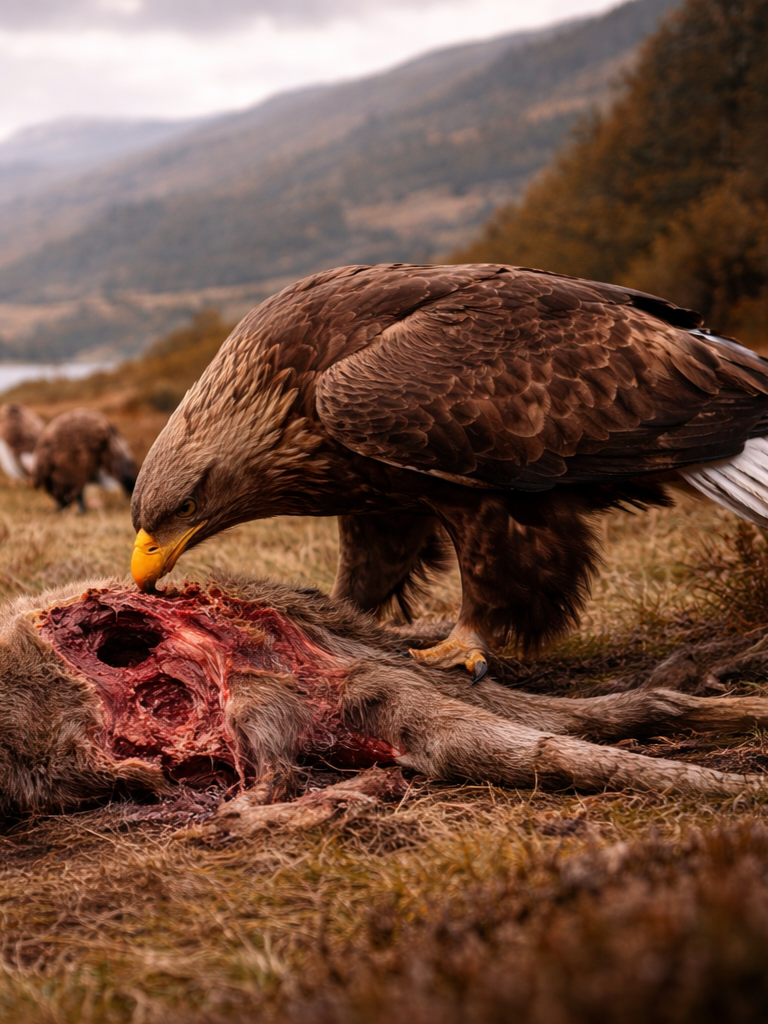
Removing carrion from coastal, estuarine and freshwater environments, supporting nutrient cycling and interacting with other scavengers such as ravens, red kites and foxes, helping to recycle energy across both aquatic and terrestrial ecosystems.
Mesopredator regulation

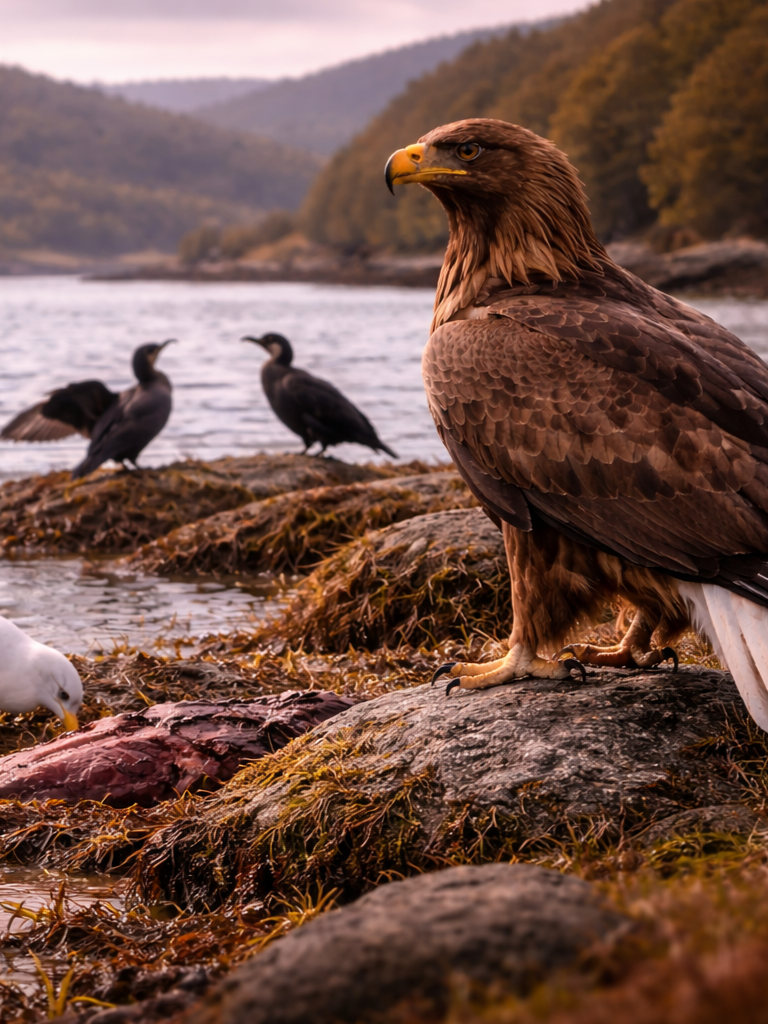
Influencing the behaviour and distribution of other predators and scavengers within aquatic landscapes (e.g. grey herons, cormorants and gulls), as well as terrestrial species like foxes and corvids, helping to shape wider food web dynamics.



What would White-tailed Eagles eat in Wales?

In Wales, White-tailed Eagles would most likely feed on abundant and accessible prey within coastal, estuarine and freshwater environments, reflecting patterns seen across Europe. Their diet would be diverse and opportunistic, centred on what is most available within these landscapes. This would be dominated by fish, alongside waterbirds such as ducks, geese and other wetland species. Gulls, cormorants and other medium-sized birds may also be taken where available. Mammals would form a smaller component of the diet, including occasional opportunistic prey such as rabbits. Carrion, particularly from fish, waterbirds, sheep and deer, would also form an important component, and is often underestimated in dietary studies.

Unlike upland systems, Wales provides a mosaic of coastal, estuarine and freshwater habitats. As a result, White-tailed Eagles would rely on a broad and flexible prey base, responding to local availability and seasonal conditions.


Would White-tailed Eagles affect protected species?

White-tailed Eagles may occasionally take a range of wild prey, including some species that are protected or of conservation concern, particularly waterbirds. However, across Europe there is no evidence that White-tailed Eagles cause population-level declines in these species. In Wales, many waterbirds are already influenced by a range of factors, including habitat change, human disturbance and predation from other species such as foxes and gulls. White-tailed Eagles are opportunistic predators, taking what is most available, with their diet spread across many species rather than focused on any one.

They spend much of their time perched (90%), and when in flight typically move through the landscape using high, energy-efficient soaring. Active hunting forms only a small part of their daily behaviour, with attempts infrequent, brief and often unsuccessful (10-30%). As a result, both predation pressure and disturbance to waterbirds are low, and typically short-lived and localised rather than repeated in the same areas. As a top predator, White-tailed Eagles may also help to influence ecosystem balance, including interactions with other predators and scavengers, contributing to more resilient coastal, estuarine and freshwater ecosystems over time.


A future food web informed by ecology

White-tailed Eagles were once part of Welsh coastal and wetland ecosystems, and the ecological processes they represent are currently incomplete. Understanding how they feed and interact with wildlife helps move the conversation from perception to evidence. Available data suggest they would function as flexible, opportunistic predators and scavengers, relying mainly on fish, waterbirds and carrion. Restoring this ecological role is not about introducing something new, but about reinstating a missing component of the natural food web, grounded in ecological reality.