White-tailed Eagle Ecosystem Roles
White-tailed Eagles are more than predators — they are a vital part of how natural ecosystems function. In Wales, these iconic birds once shaped coastal and wetland landscapes. As a top species in the food web, they influence how wildlife interacts, how energy and nutrients move through ecosystems, and how habitats grow and recover over time.
By restoring White-tailed Eagles to Wales, we are not just bringing back a missing species — we are restoring natural processes that help keep ecosystems healthy, balanced and resilient.
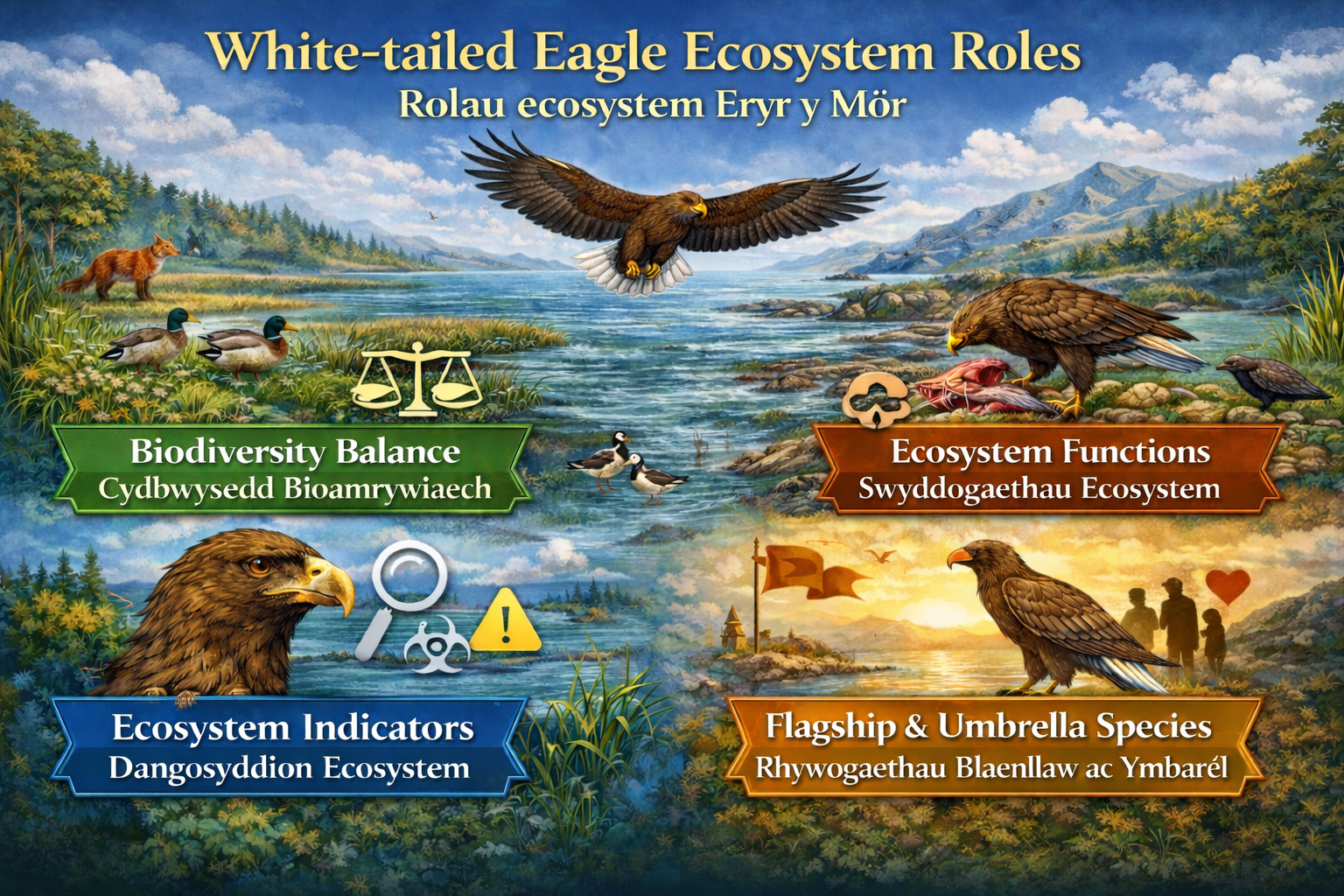

White-tailed Eagles help maintain balance across Welsh coasts, wetlands and river systems by regulating species and supporting healthy biodiversity, keeping wildlife in balance.
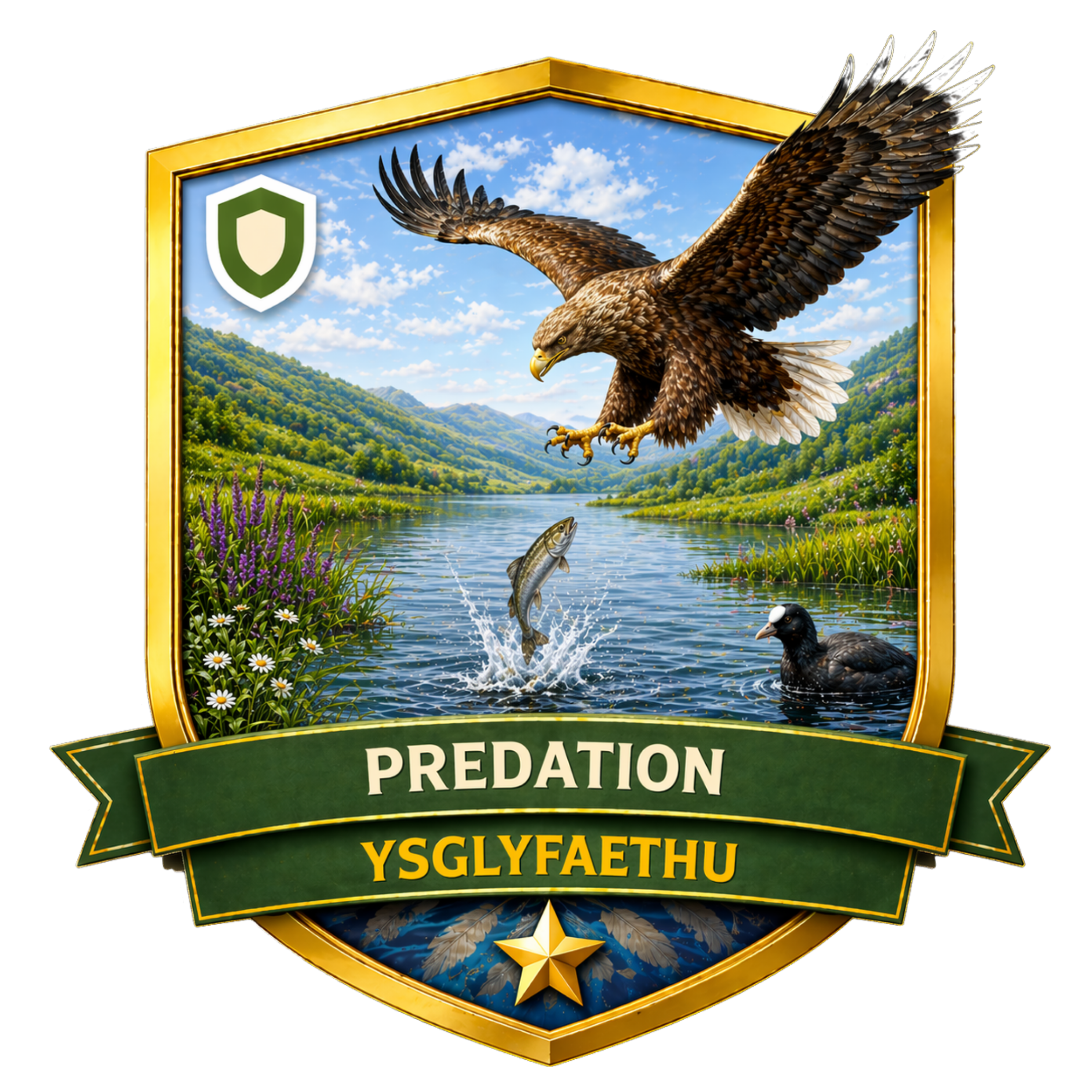
Predation
White-tailed Eagles mainly take common and seasonally abundant prey such as fish and waterbirds, helping prevent overpopulation and reduce pressure on Welsh coastal and wetland habitats.
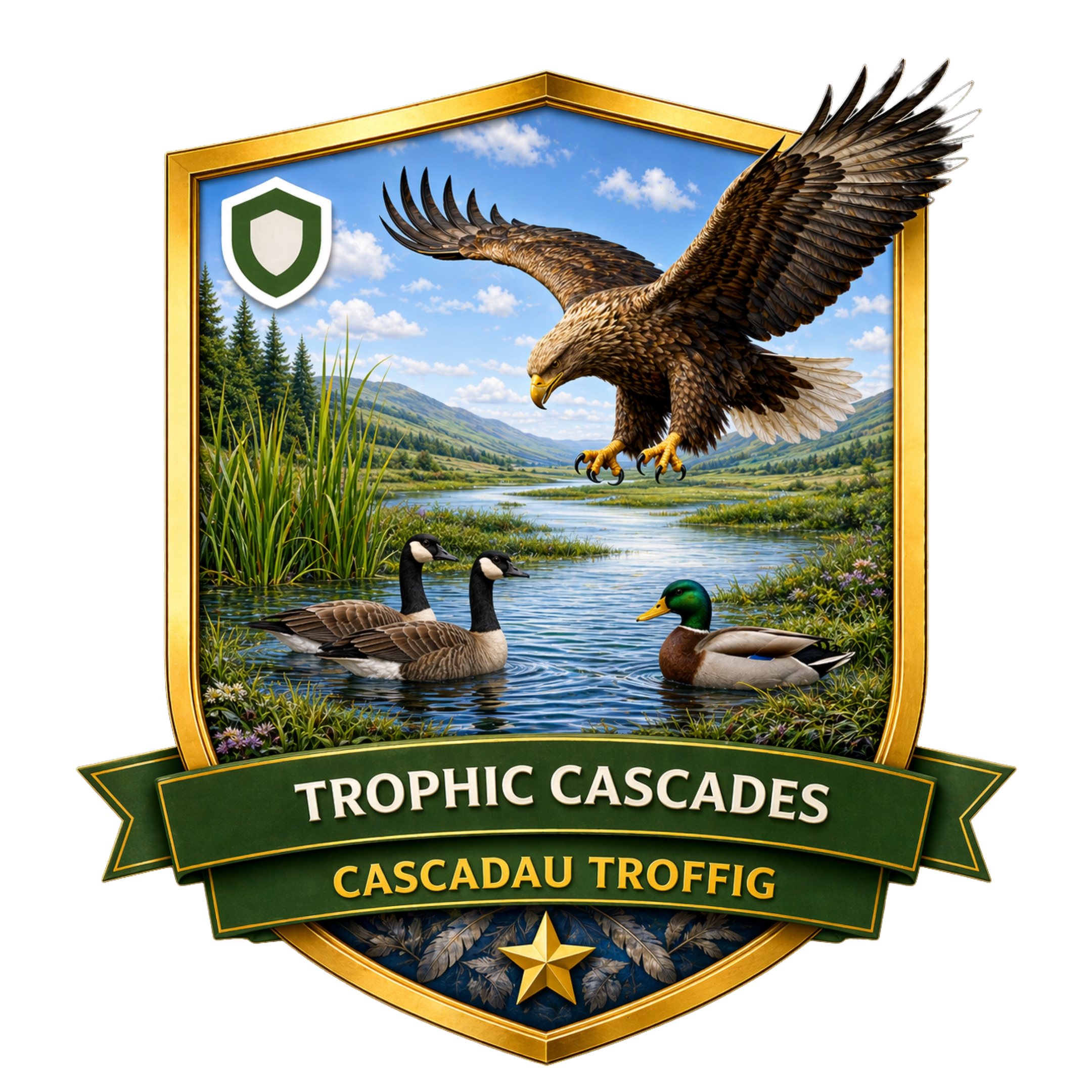
Trophic Cascades
The presence of White-tailed Eagles in Welsh landscapes can change how prey behave. For example, waterbirds may alter feeding or roosting patterns, allowing habitats such as saltmarsh and wetland vegetation to recover.
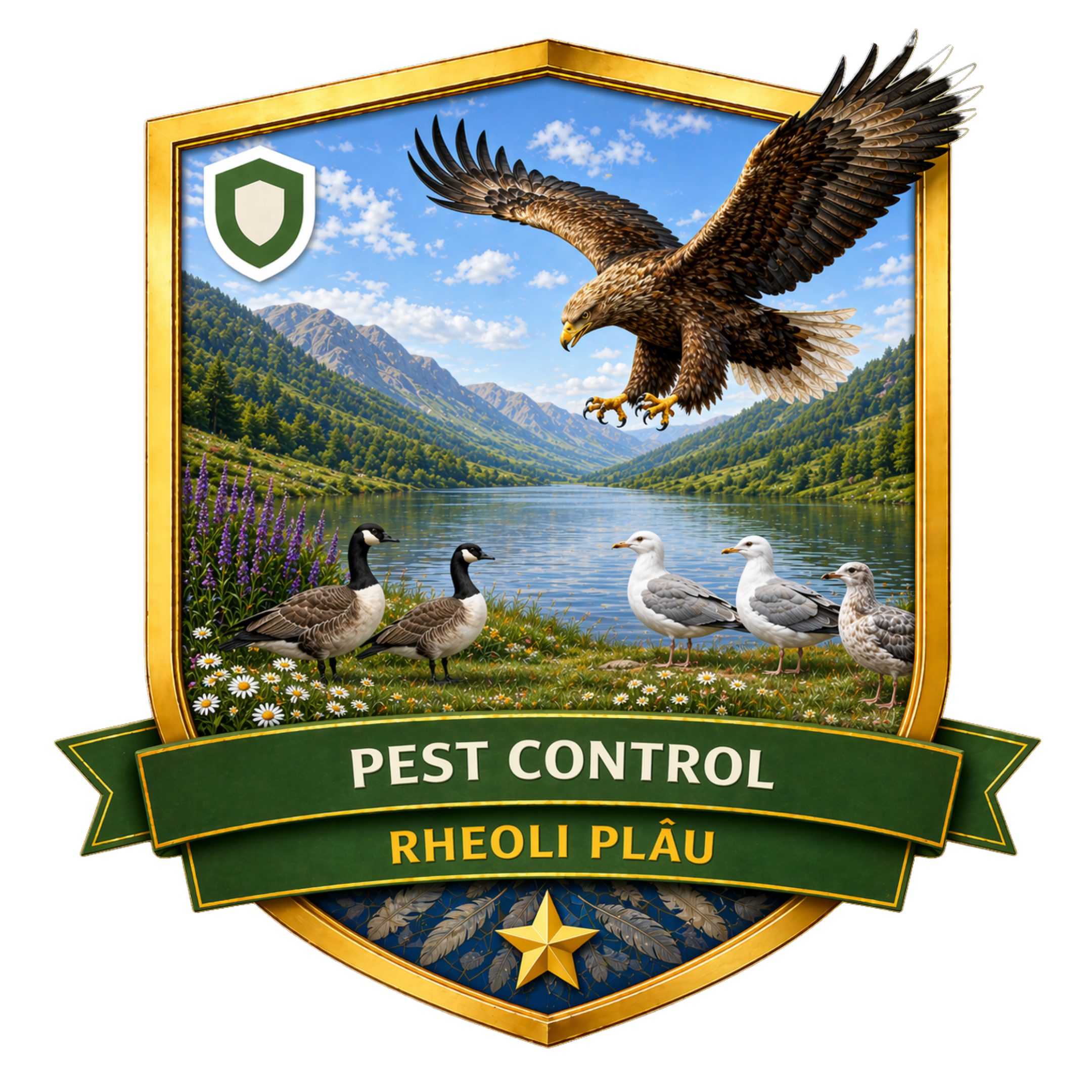
Pest Control
White-tailed Eagles can help reduce species such as gulls and geese in some contexts, limiting pressure on other bird populations and supporting vulnerable Welsh wildlife.
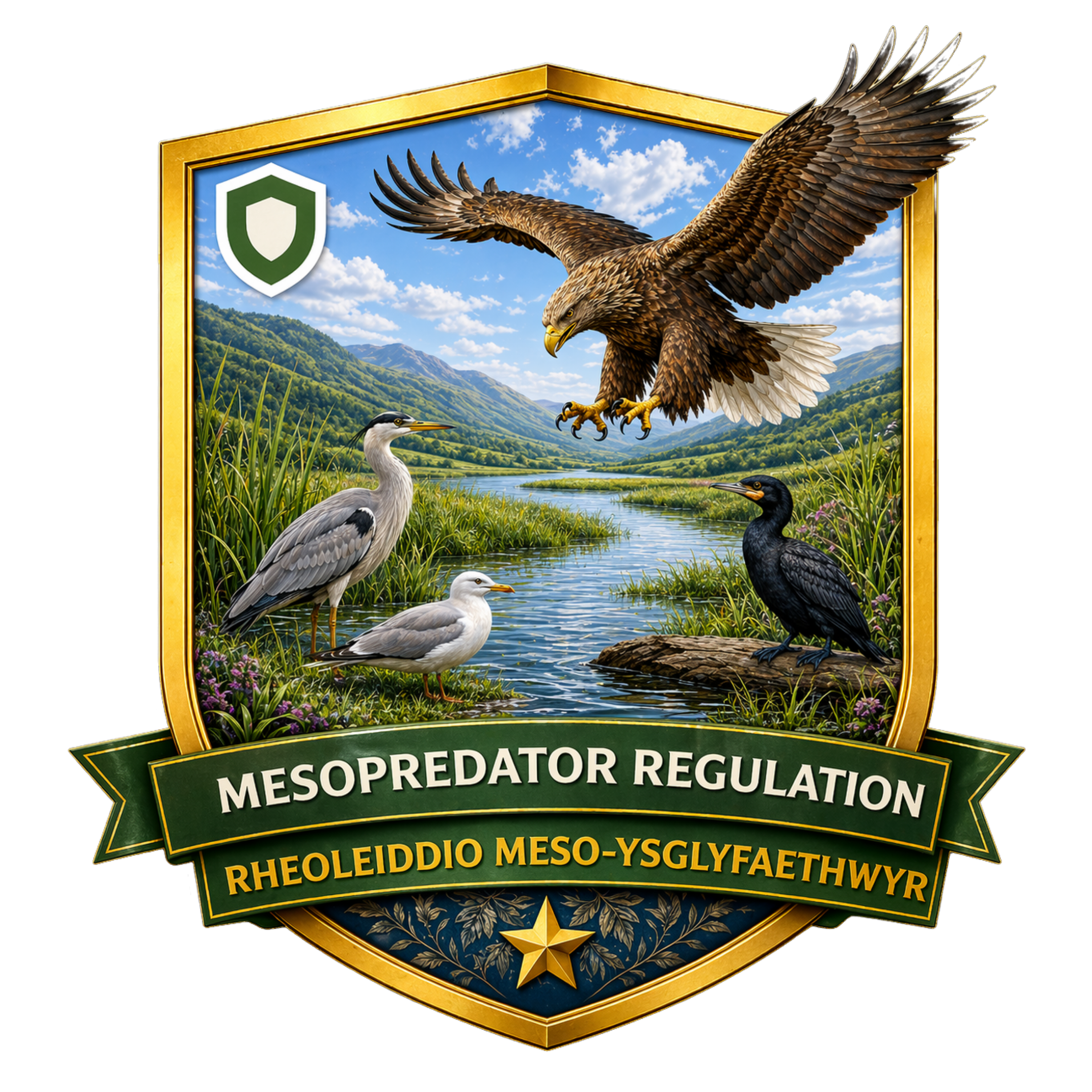
Mesopredator regulation
White-tailed Eagles can influence smaller predators in Wales, such as cormorants, gulls and herons, helping reduce pressure on ground-nesting birds and wetland species.
Biodiversity Health
By often targeting weaker or more vulnerable individuals, White-tailed Eagles in Wales can support healthier, more resilient wildlife populations.
Wildlife Balance
Together, these roles show how White-tailed Eagles in Wales help prevent any one species from becoming dominant, supporting more stable coastal and wetland ecosystems.

White-tailed Eagles in Wales help restore ecosystem function by moving energy, nutrients and resources across the landscape.

Ecosystem Regulation
White-tailed Eagles help maintain balance across coastal and wetland ecosystems by influencing how species interact and preventing any one species from becoming too dominant in Welsh ecosystems..

Energy Transfer
White-tailed Eagles move energy through the food web by feeding on fish, birds, and carrion, supporting other Welsh wildlife and ecosystem processes.

Scavenging
White-tailed Eagles regularly scavenge carrion, including fish and waterbirds, removing carcasses from Welsh coastal, wetland, and terrestrial environments.

Disease Regulation
Through scavenging, White-tailed Eagles help reduce carcass build-up, limiting the spread of disease among wildlife populations.

Nutrient Cycling
By feeding on prey and carrion, White-tailed Eagles return nutrients to ecosystems, supporting plant growth across wetlands, estuaries and coastal habitats.

Resource Linking
White-tailed Eagles move between marine, freshwater and terrestrial environments, transferring energy and nutrients across the wider Welsh landscape.

White-tailed Eagles in Wales help us understand environmental change and support more resilient ecosystems.

Ecosystem Resilience
White-tailed Eagles help Welsh wetland ecosystems become stronger and better able to recover from environmental change and disturbance.

Bioindicator Species
The presence and breeding success of White-tailed Eagles in Wales can reflect the health of coastal and wetland environments.

Sentinel Species
Changes in White-tailed Eagles in Wales, such as their health or behaviour, can act as early warning signs of environmental pressures.

White-tailed Eagles in Wales play an important role in inspiring conservation and protecting wetland landscapes.

Umbrella Species
Protecting White-tailed Eagles in Wales helps safeguard large areas of coastal, wetland and riverine habitat and the many species that depend on them.

Flagship Species
White-tailed Eagles in Wales are powerful symbols of natural heritage and can inspire people to support conservation across coastal and wetland environments.

Keystone Species
White-tailed Eagles in Wales can have a disproportionate impact on wetland ecosystems, helping maintain balance across complex food webs.