Current UK Distribution and the Need for Reintroduction in Wales
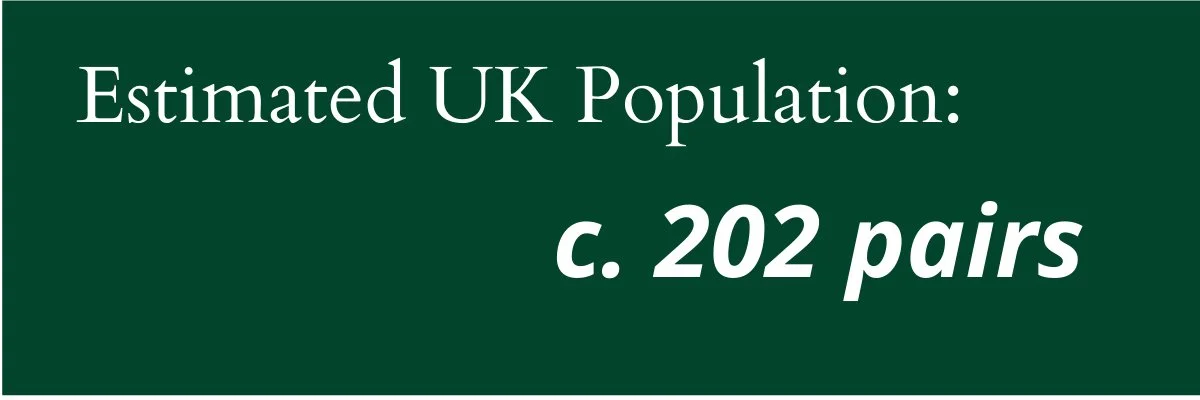
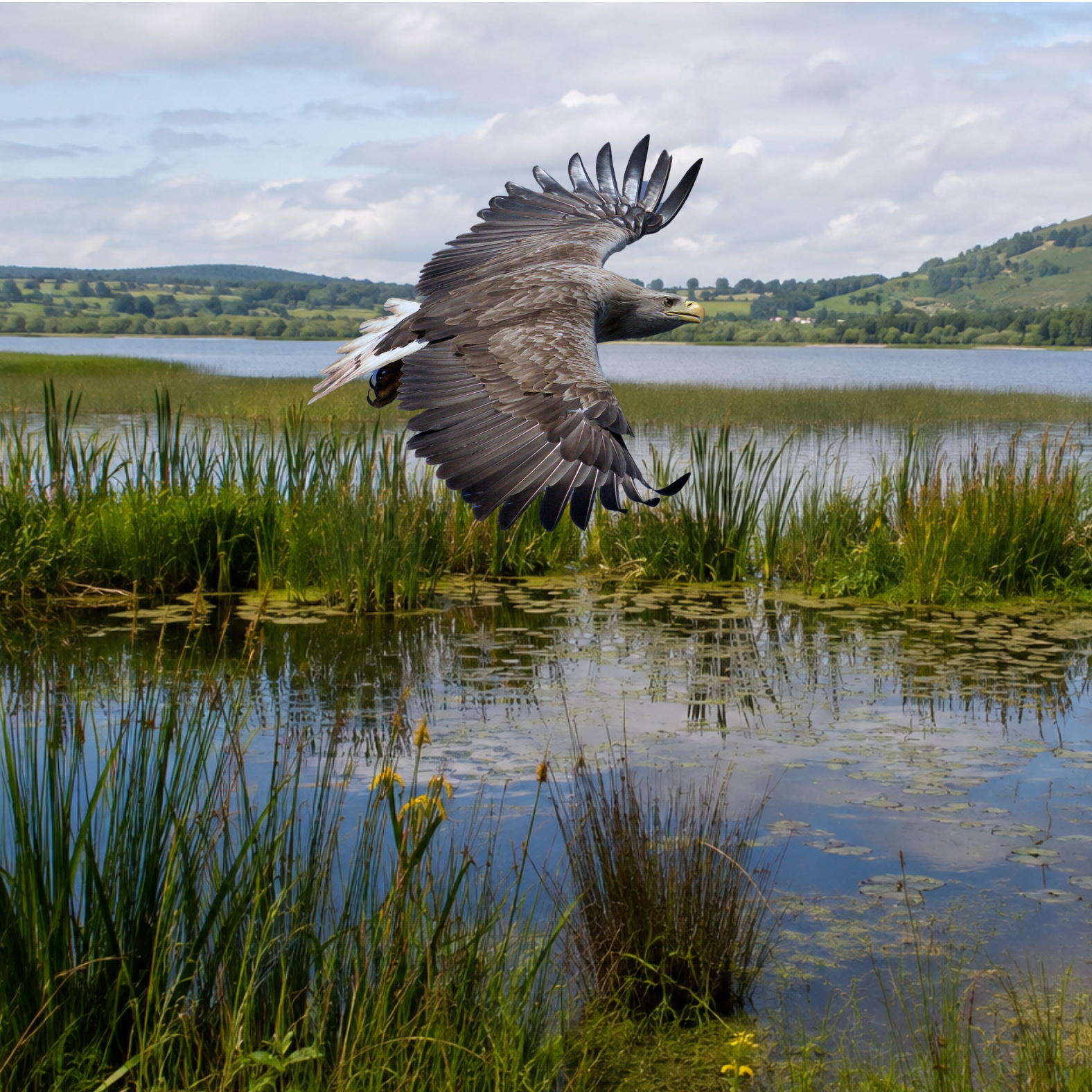
Over the past 50-years, White-tailed Eagles have made a remarkable recovery across parts of Britain through carefully managed conservation programmes. The species was first reintroduced to Scotland in 1975, where it now supports the UK’s largest and most established breeding population (200 pairs), particularly along the west coast and islands. More recently, restoration programmes have also begun in southern England, including releases on the Isle of Wight, helping the species expand into parts of its historic range (2 pairs). Despite this progress, Wales currently has no resident breeding population, leaving a significant gap in the species’ former British distribution.
Although young White-tailed Eagles are capable of travelling long distances, their natural expansion is influenced by natal philopatry — a behavioural tendency for young birds to return to breed close to the area where they were raised. Studies of recovering populations show that most birds establish territories within 11-60km of their natal sites, meaning population expansion typically occurs slowly and outward from existing breeding centres. As a result, natural recolonisation of Wales from current populations could take many decades.
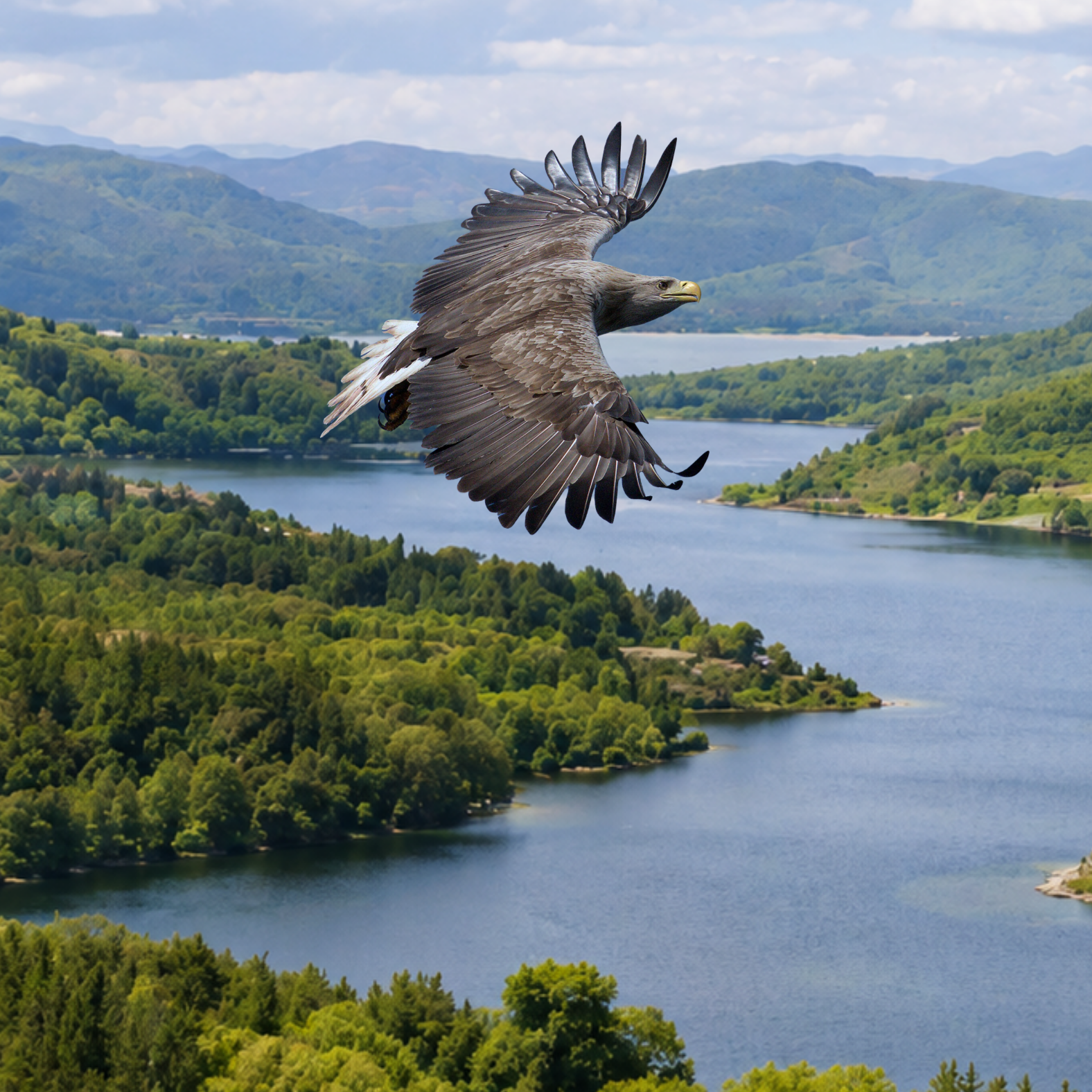
Southeast Wales presents a unique opportunity to restore the species to an important part of its historic range while strengthening the developing population in southern Britain. The region supports a rich network of coastal wetlands, estuaries, reservoirs and river systems, with the Severn Estuary and surrounding landscapes providing abundant feeding opportunities for wide-ranging raptors.
The 60 km zone shown on the map represents the projected core breeding landscape over the first decade of restoration, encompassing the Severn Estuary and surrounding habitats capable of supporting territorial pairs. Restoring White-tailed Eagles to this landscape would help reconnect Wales with its lost wetland raptor while contributing to a more resilient and connected population across Britain.